
Today’s Briefing

The latest drilling, deal-flow, and regulatory news across the globe

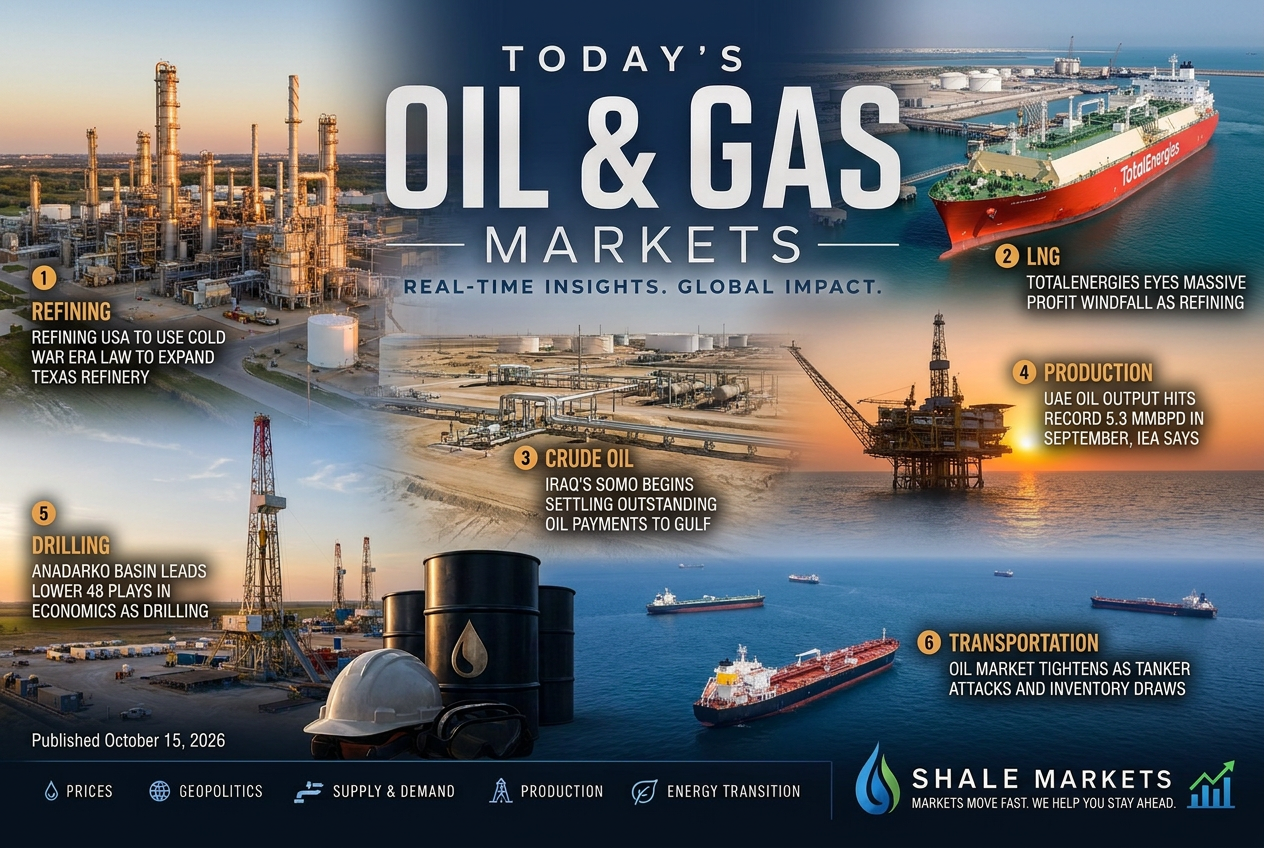
Illustrated summary of the top stories in the Shale Markets Briefing — October 15, 2026 briefing

Monday, August 17, 2026

Shale Markets Original
NDTV Profit · 9:43 AM

Crude Oil May Fall To $60 A Barrel; India To Benefit, Says Julius Baer's Mark Matthews

Lower crude prices would ease import costs for refiners and downstream users in India, but they also signal softer global demand or looser supply conditions that can pressure producer revenues and capital budgets across the sector. For an executive, the main read-through is margin relief in consuming markets alongside a potentially weaker pricing environment for upstream investment decisions.

Net Power Says It Is Focusing on Gas to Ride Data Center Demand

Net Power’s shift toward gas-backed projects signals where near-term demand is concentrating: developers and power buyers are prioritizing quick, reliable capacity over more speculative low-carbon concepts. For gas producers and power infrastructure firms, that can support incremental demand tied to data center buildout and improve the competitive position of gas-fired generation in capital allocation decisions.
finance.biggo.com · 9:43 AM

US Crude Oil Share of South Korea's Imports Tops 20% for First Time; Middle East Dependence Falls to 62%

South Korea buying a larger share of U.S. crude signals that Atlantic Basin barrels are taking a larger role in Asian supply planning, which can support U.S. export flows and tighten competition for Middle East cargoes. For refiners and traders, it points to shifting crude slate economics and a more diversified procurement strategy among major importers.
Sponsored
Newsletters Automation & Hosting Platform

Upstream revival drives 20% surge in oil rig count

A rising rig count in Nigeria signals renewed upstream spending and a firmer operating environment for service providers, which can translate into more drilling demand and better asset utilization. For executives, it points to improving capital allocation toward production growth in a key African supply market, with implications for local supply balance and competitive positioning.

Get the daily briefing

Join oil & gas executives who start their day with Shale Markets.

Q2 Rundown: EQT (NYSE:EQT) Vs Other Upstream Natural Gas E&P Stocks

EQT is a bellwether for Appalachian gas capital allocation and cash generation, so a quarterly comparison against peers helps executives judge whether dry-gas spending and returns are improving relative to the group. It also signals whether gas-focused E&Ps are holding leverage to pricing, hedge books, and operating efficiency in a market where basin discipline matters.

How China Shielded Itself From Oil Shock

China’s approach to insulating its economy from oil price shocks signals how large importers can blunt demand volatility and reduce immediate exposure to global crude disruptions. For executives, it matters because it can reshape import patterns, soften near-term pricing swings, and influence where incremental supply growth is needed.

How China Shielded Itself From Oil Shock

China’s ability to blunt oil-price shocks matters because it affects how much demand weakness can absorb higher crude costs and how quickly that pressure feeds back into global balances. For executives, it signals that policy and inventory management in China can alter trade flows, refinery runs, and pricing power across export markets.
Sponsored
Ray's Gym Tracker
Межа. Новини України. · 9:43 AM

Hidden Gulf Oil Shipments Help Contain Global Prices Amid Prolonged Iran War

The story points to Gulf supply still reaching the market despite conflict risk, which can keep a lid on prices and reduce the urgency for buyers to chase replacement barrels elsewhere. For executives, that signals that geopolitical disruption may be cushioned by rerouted or obscured flows, preserving near-term market balance but keeping enforcement and shipping risk elevated.

Why Has Oil Not Rallied to $150 or Higher?

Higher oil prices would alter capital allocation across upstream portfolios, so analysis of why Brent has not reached extreme levels matters for understanding whether producers should keep prioritizing drilling and hedging or preserve discipline. It also signals how supply-demand balance and OPEC capacity are capping upside, which affects pricing expectations for the sector.

Indian Oil Giant Secures U.S. License to Return to Venezuela

This signals that sanctioned international barrels are still accessible when U.S. licensing allows it, which can affect crude supply balances and the flow of capital back into politically risky export markets. For executives, it also underscores how compliance and geopolitics can reopen or constrain trading and investment opportunities outside the usual Middle East or North American supply chain.

Get the daily briefing

Join oil & gas executives who start their day with Shale Markets.

Will Andy Burnham allow North Sea oil and gas drilling as Rosebank decision looms?

The Rosebank decision is a signal on how far UK policymakers will go in supporting new North Sea supply, which affects capital allocation into offshore projects and the pace of investment in the basin. For executives, it also speaks to regulatory risk around future drilling and the competitiveness of North Sea barrels versus imports and other low-cost sources.

Sunday, August 16, 2026

Sponsored
Newsletters Automation & Hosting Platform

Shadow Tanker Relays Keep Oil Flowing Amid Hormuz Strikes

The report signals that shipping workarounds can keep Gulf crude moving even under attack risk, which helps cap immediate price spikes but raises freight and security costs across the supply chain. For executives, it is a reminder that Middle East disruption can quickly affect export flows, tanker availability, and near-term crude pricing rather than just local security conditions.

Showing 1126–1150 of 1375
