At ShaleInsight 2026, Appalachian Producers Talk Pipelines and Power Contracts, Not Just Barrels
Appalachian producers are hedging an unresolved timeline on LNG, power demand, and pipeline capacity rather than betting on when it resolves.

Original analysis and commentary from our desk — written here, not aggregated.

Appalachian producers are hedging an unresolved timeline on LNG, power demand, and pipeline capacity rather than betting on when it resolves.

China's 15% tariff on U.S. LNG remains outside the latest Trump-Xi trade relief, leaving 24.5 million tonnes of uncontracted Gulf Coast capacity to find buyers elsewhere.

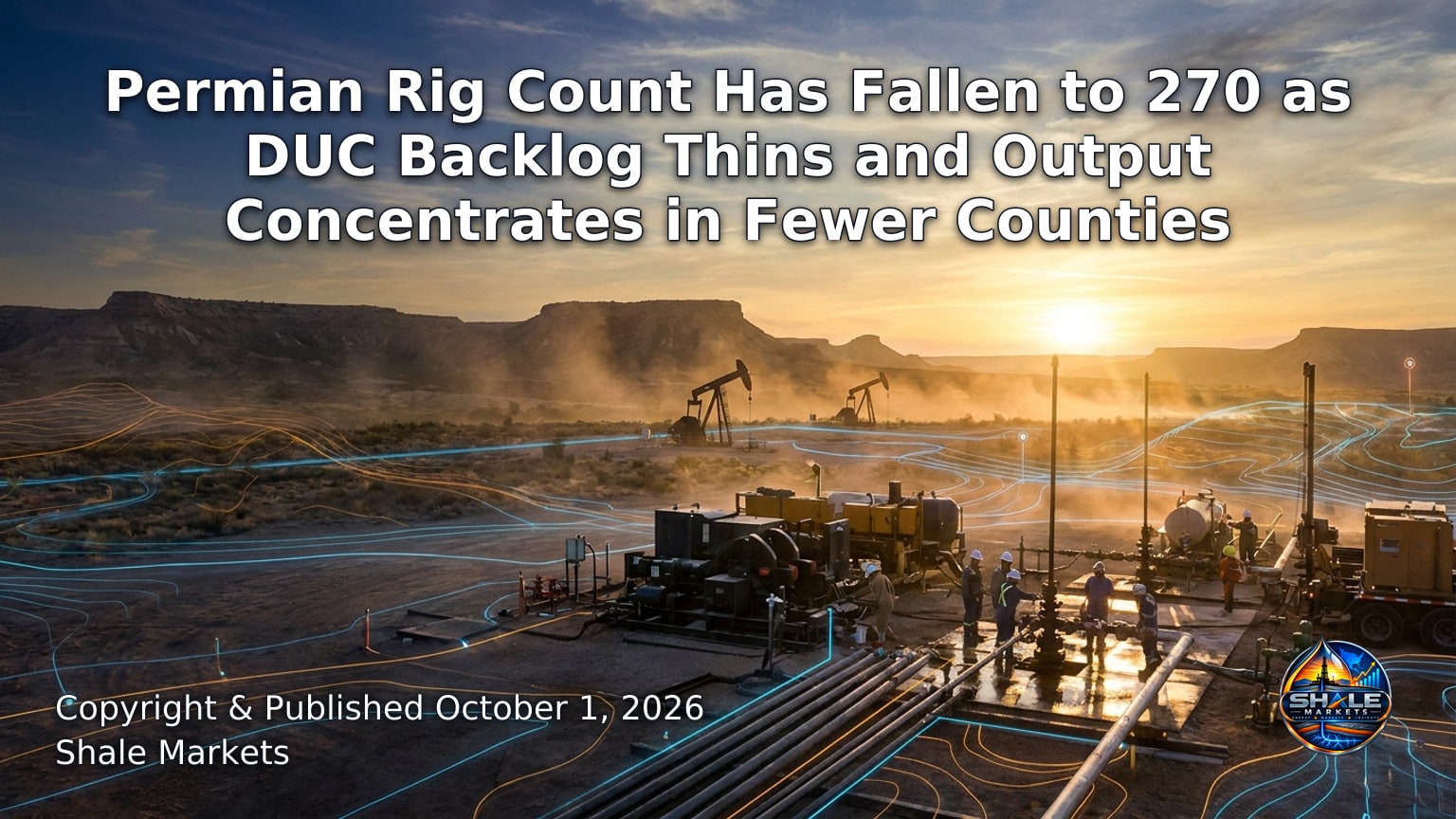
Diamondback is holding output flat by draining its DUC backlog rather than adding rigs, as Permian production concentrates in a handful of top counties.

Falling rig counts and 2026 capex cuts are pushing U.S. shale operators toward DUC inventories and existing wells, raising the risk of a faster production decline once that cushion runs out.

Chord Energy is selling its non-operated Marcellus position in northeast Pennsylvania to POSCO International for $550 million, a deal tied to POSCO's future LNG liquefaction plans.

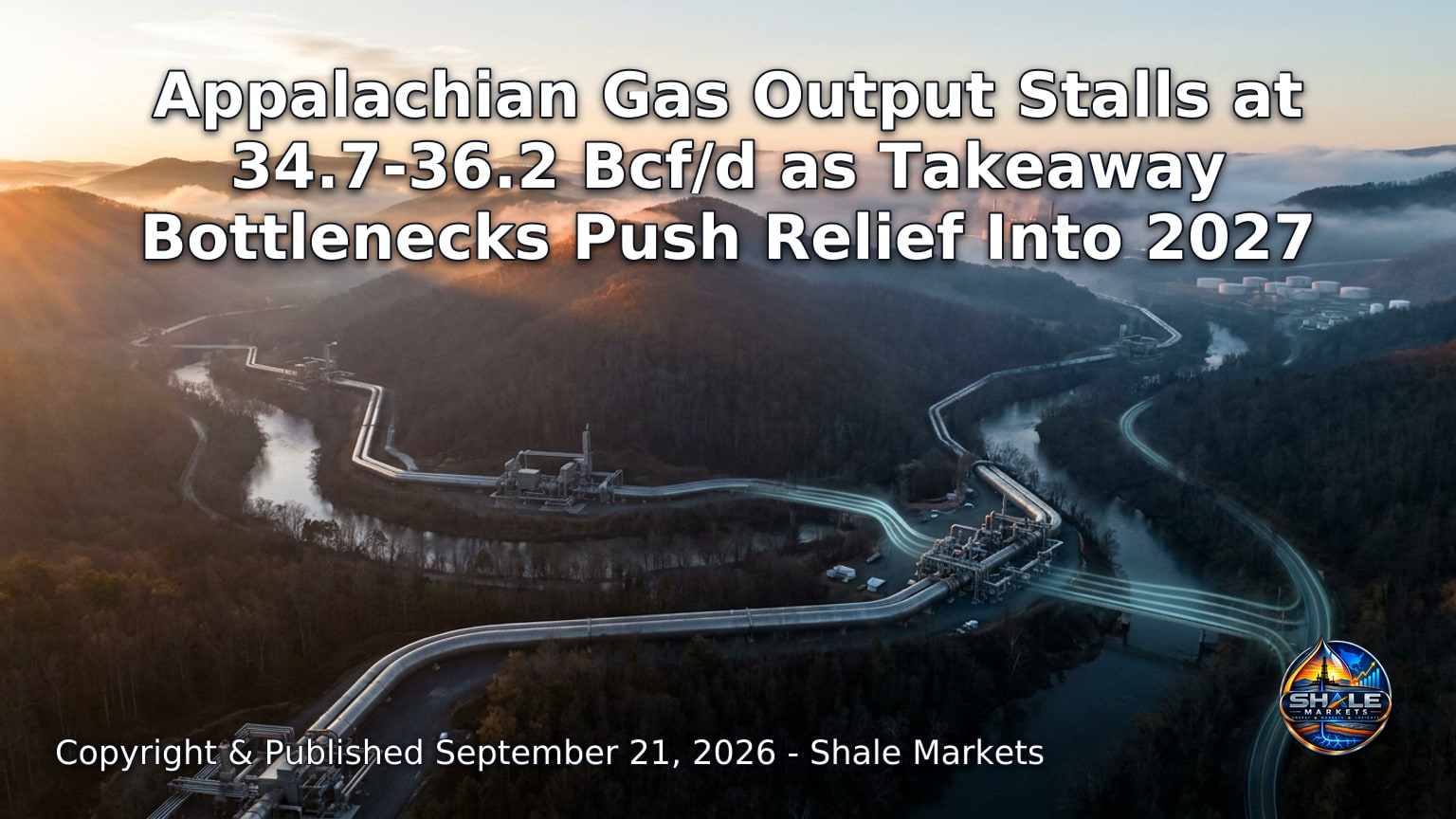
Appalachian gas production has stalled between 34.7 and 36.2 Bcf/d as pipeline bottlenecks squeeze operators, with meaningful relief not expected until 2027.

Permian gas output is outrunning crude growth as rising gas-oil ratios in maturing wells push takeaway capacity toward its limits.

New Ohio gas-fired power projects from Williams, SB Energy, Enbridge and others are letting producers route Utica gas straight to local demand, bypassing long-haul takeaway capacity.

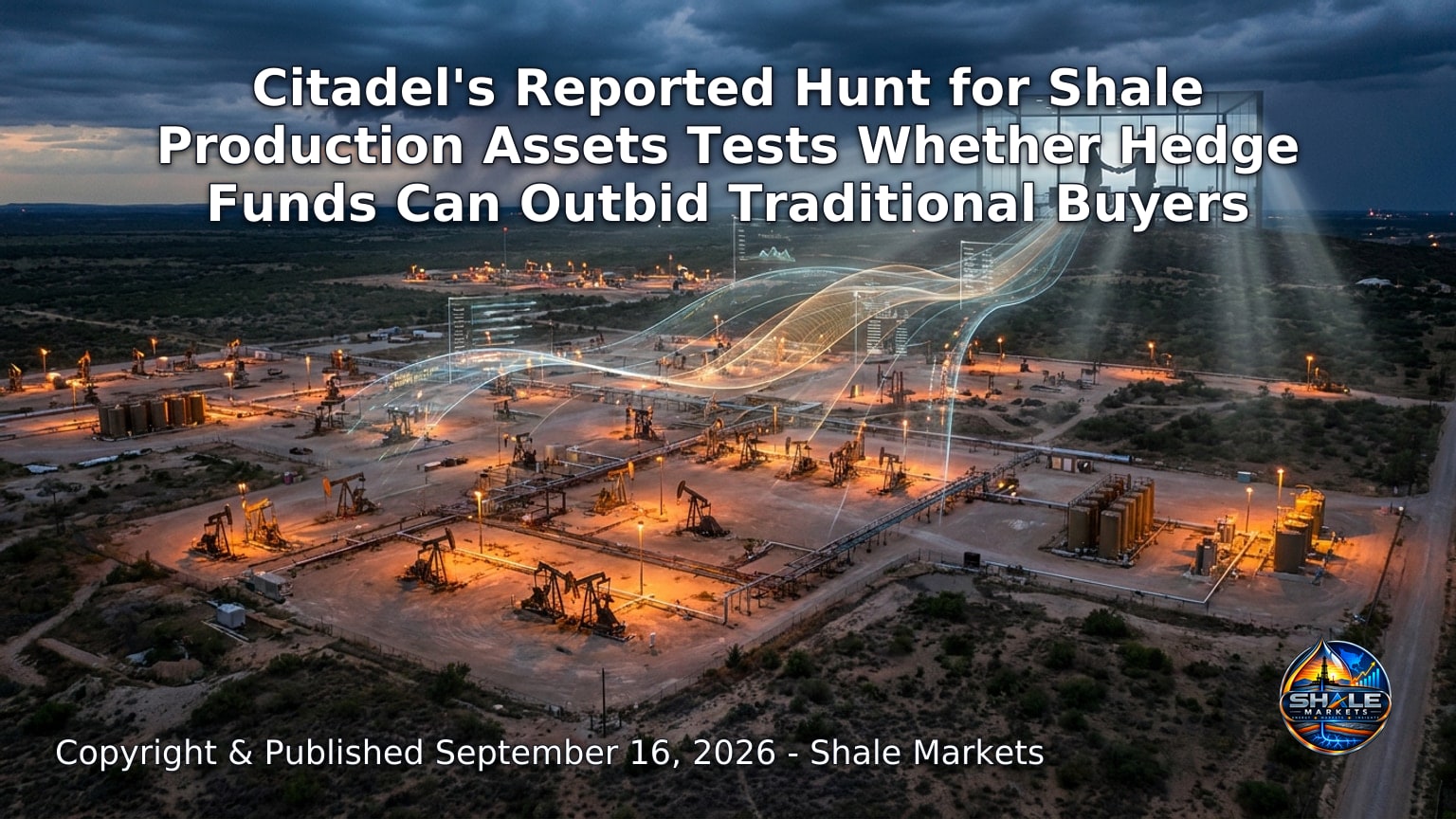
Diversified's $1.8 billion Birch Permian deal sets a 3.3x EBITDA benchmark just as Citadel is reported to be shopping for shale production assets of its own.

U.S. crude growth has slowed to a trickle in 2026, with the Permian carrying nearly all remaining gains as rig counts, pipeline capacity, and EIA forecasts shift.

ConocoPhillips, Diamondback and Devon are expanding surfactant chemistry programs in the Permian Basin as per-well productivity gains from drilling design alone begin to slow.

U.S. refiners are running at near-record utilization while shale output climbs, pushing surplus crude toward export docks instead of domestic units.

While the Permian builds pipe to move growing volumes, Guyana and Brazil are locking in a permanent reliance on tankers instead of fixed export lines.

Thiel Macro's new Vista Energy stake puts a dollar figure on Argentina's RIGI bet, but the filing itself confirms far less than the surrounding commentary suggests.

The Birch and Paloma deals show that Permian consolidation is being driven by capital structure — private-equity exits meeting buyers with existing scale — rather than by new bidders chasing undeveloped rock.

As Permian decline curves outpace rig-count efficiency gains, operators are shifting 2027 budgets from new drilling toward base-decline management.

As the Strait of Hormuz stalls, condensate and NGL markets are showing more strain than crude benchmarks, which have a substitution path light ends lack.