
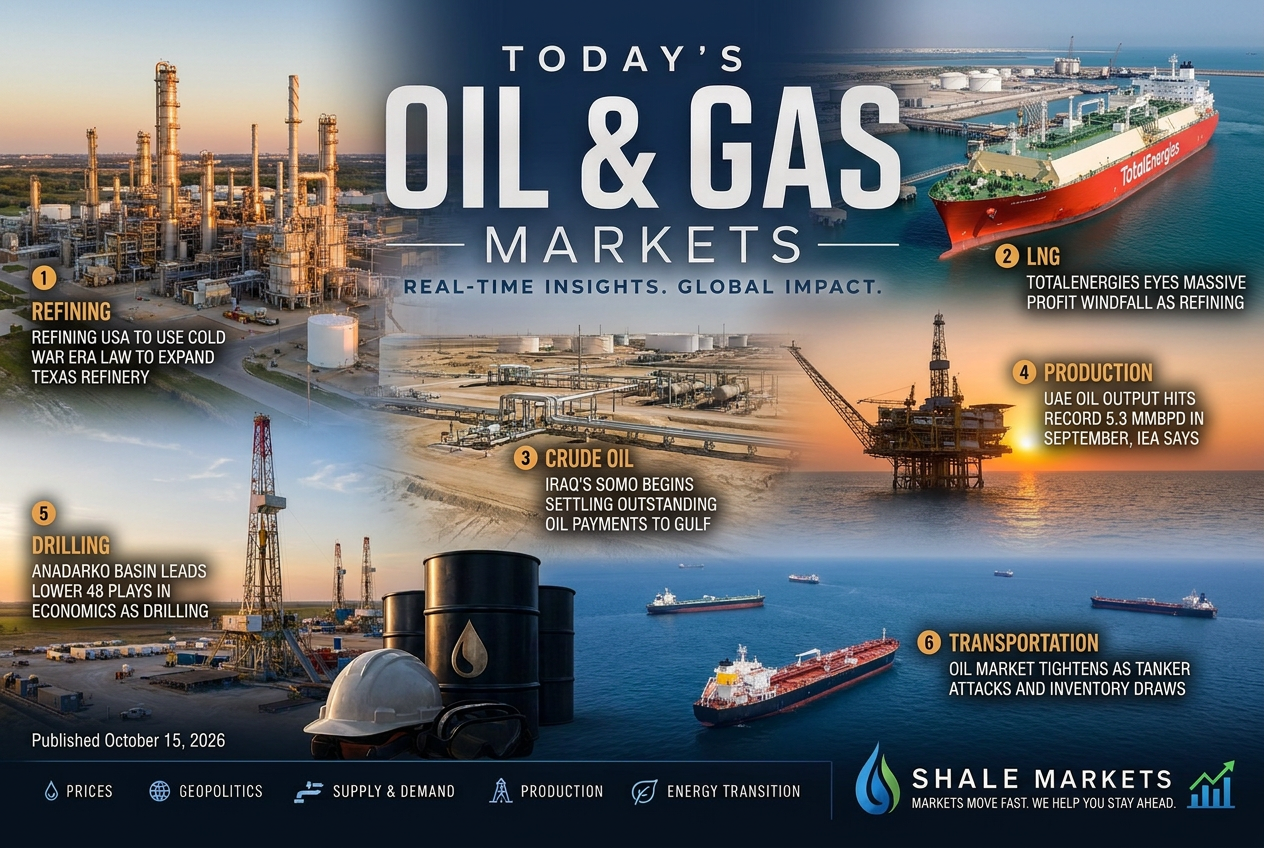
Today’s Briefing

The latest drilling, deal-flow, and regulatory news across the globe

Illustrated summary of the top stories in the Shale Markets Briefing — October 15, 2026 briefing

Thursday, August 13, 2026

OilPrice.com · 8:18 PM

Mexico Has More Refining Capacity. So Why Are Fuel Imports Rising?

Mexico’s refining push is not translating into lower import dependence, which signals that domestic capacity additions matter less than utilization and reliability. For an executive, this points to continued demand for imported fuels and a tougher competitive position for Pemex and any domestic downstream assets until operating performance improves.

India Seeks More USA LPG

This signals continued export demand for U.S. LPG and supports Gulf Coast processing and loading infrastructure tied to overseas buyers. For executives, it points to stronger visibility for NGL sales and a market that is increasingly shaped by Asian import requirements rather than domestic consumption alone.

The Struggle to Build the TAPI Gas Pipeline Through Afghanistan

The TAPI delay shows how geopolitical risk and weak state capacity can keep major cross-border gas infrastructure from becoming investable, even when the strategic demand case is clear. For executives, it is a reminder that South Asian export corridors remain uncertain outlets for Central Asian gas and that capital may be better allocated to shorter-cycle or lower-risk midstream options.

Hormuz Stalemate Raises Risk of $120 Oil

A sustained risk premium around the Strait of Hormuz raises the odds of a tighter global crude balance and forces refiners and traders to hedge for supply disruption rather than demand weakness. For executives, that means capital and inventory decisions could shift quickly toward protection against higher feedstock costs and freight disruption.
Sponsored
AI-Driven Interactive Websites

Global Refining System Has Little Spare Room Left

Tight global refining capacity means disruptions or margin spikes can move faster through the market, which raises volatility risk for crude, product, and feedstock planning. For executives, it signals that access to conversion capacity and product logistics is becoming a more important competitive advantage than simple crude supply exposure.

Get the daily briefing

Join oil & gas executives who start their day with Shale Markets.

Presidio Forms AI Engineering Team

This signals that service providers are building internal AI capability to sell higher-value workflows, which can shift spend toward software-enabled efficiency rather than traditional field services. For operators, it points to competitive pressure to adopt automation and data tools to protect margins and improve basin-level performance.

USA Gasoline Price Breaks Records

Record gasoline prices signal sustained strain in U.S. downstream margins and point to consumer fuel demand sensitivity that can reshape refinery runs and product spreads. For executives, it is a reminder that retail pricing, crude slate planning, and policy scrutiny are likely to stay elevated.

5 LNG Megaprojects Poised to Power the Next Gas Boom

The headline points to a period of tighter global gas pricing and a stronger case for capital to keep flowing into LNG capacity, especially where long-life export assets can secure market share. For executives, that signals more value in basins and projects tied to export logistics and geopolitically resilient supply than in purely domestic gas exposure.
Sponsored
Newsletters Automation & Hosting Platform

Wednesday, August 12, 2026

USA Oil, Gas Workforce Hits Lowest Level in Years

A shrinking extraction workforce points to tighter labor availability for drilling and production activity, which can slow execution and raise operating costs if operators need to compete harder for crews and field talent. For executives, it signals that labor may be constraining near-term activity even if commodity fundamentals support continued development.

Trump Puts 81 Million Gulf Acres Up for Oil and Gas Auction

This signals that Gulf acreage is being kept in the leasing pipeline, which supports offshore exploration spending and gives operators another chance to secure inventory as crude prices stay firm. For executives, it also indicates continued policy support for U.S. offshore output and a near-term path for capital to shift toward lease acquisition and later drilling activity.

Get the daily briefing

Join oil & gas executives who start their day with Shale Markets.

Sponsored
Newsletters Automation & Hosting Platform

Iran Says Hormuz Will Stay Closed Until U.S. Meets Its Conditions

The Strait of Hormuz is a critical choke point for global crude flows, so any prolonged closure raises the risk of supply disruption and higher freight and insurance costs across the market. For executives, the key signal is that regional risk is being tied to broader political demands, which can delay cargoes, tighten prompt supply, and keep volatility elevated.

Showing 1226–1250 of 1375