
Today’s Briefing

The latest drilling, deal-flow, and regulatory news across the globe

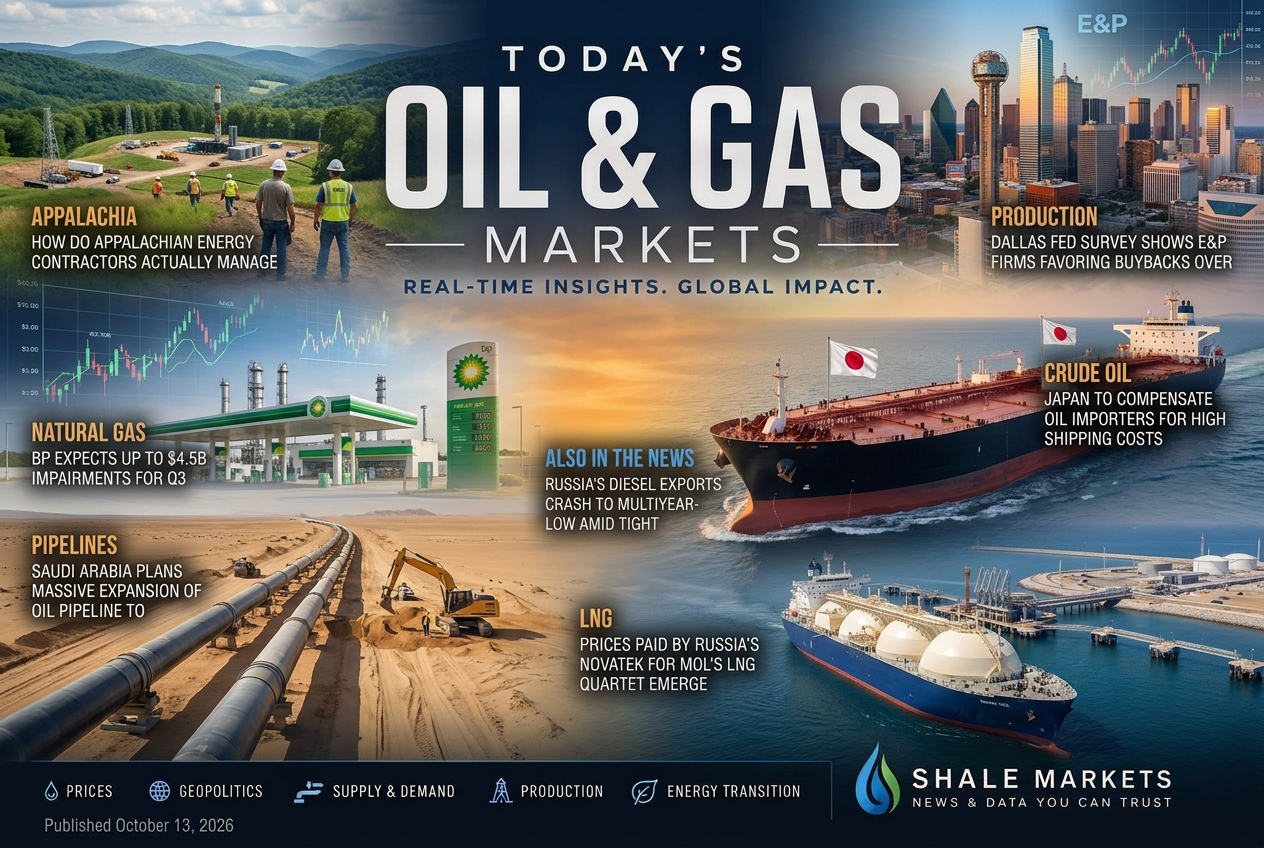
Illustrated summary of the top stories in the Shale Markets Briefing — October 13, 2026 briefing

Thursday, September 3, 2026

KNOC, Kogas to Merge

South Korea’s plan to merge state-run energy firms signals a push to reshape public-sector capital spending and reduce duplication in a market where power demand is rising. For executives, it points to a more centralized state role in the energy system and potential changes in how upstream and gas assets are managed.
Sponsored
AI-Driven Interactive Websites

Chevron Announces JV Plans to Invest $7B in Venezuela

Chevron’s planned spending in Venezuela signals continued capital commitment to a politically constrained but resource-rich basin, which could support local output and keep the company positioned if access conditions hold. For competitors and suppliers, it is a reminder that capital is still being directed to sanctioned or high-risk geographies where future barrels may be relatively advantaged.

Get the daily briefing

Join oil & gas executives who start their day with Shale Markets.

Wednesday, September 2, 2026

Major U.S. Oil Port Selected for Nuclear Power Project

Corpus Christi’s selection signals that major U.S. industrial sites are being considered as anchor customers for small modular reactors, which could open a new source of power demand tied to heavy energy users. For oil and gas executives, it matters because port and midstream hubs may start competing on access to low-carbon firm power as a factor in long-term capital planning.
Sponsored
AI-Driven Interactive Websites

USA-VEN Oil Deal Dubbed a 'Major Opportunity'

The reported U.S.-Venezuela deal matters because any easing of constraints on Venezuelan barrels would affect global crude supply and reshape where capital is directed in Latin America. For executives, it signals a potential shift in production outlook and competitive positioning for supply tied to sanctioned or politically sensitive sources.

US oil giant Chevron has confirmed plans to expand its operations in Venezuela

Chevron's plan to expand in Venezuela signals that some international oil companies still see value in re-entering or growing in sanctioned and politically sensitive barrels. For executives, it points to potential shifts in capital allocation toward low-cost crude exposure and a small but notable easing in the competitive constraints around Venezuelan supply.

Capricorn Board Picks DNO Offer over Genel

Capricorn is effectively choosing between two partners already active in Kurdistan to back its move into Egypt, which signals how regional incumbents are using asset swaps and corporate bids to extend their footprint. For executives, this is a reminder that capital is still chasing entry points in Africa and the Eastern Mediterranean where operators can convert deal access into new production exposure.

Get the daily briefing

Join oil & gas executives who start their day with Shale Markets.

Ukraine’s Refinery Strikes Force Russia to Process Oil Abroad

Russia’s inability to keep refinery output steady is forcing it to look outside its own system for processing capacity, which signals strain in domestic fuel supply and export management. For executives, the bigger issue is that sustained disruption can alter regional crude flows, pressure margins, and strengthen the case for downstream and logistics diversification.
Sponsored
Newsletters Automation & Hosting Platform

U.S. Energy Secretary Says Venezuela Could More Than Double Oil Production

Potentially higher Venezuelan output would add barrels to a market that has been constrained by underinvestment and sanctions, which matters for pricing and for where traders expect incremental supply to come from. The mention of U.S. and foreign deals also signals a possible shift in capital allocation toward a higher-risk producing country with significant heavy crude potential.

Showing 751–775 of 1325

